Embark on a journey through the world of roofing warranty options, where we delve into the intricacies of different warranties available to homeowners. From understanding the types of warranties to exploring coverage details, this guide aims to provide a clear and informative overview of this crucial aspect of roofing.
As we navigate through the nuances of roofing warranties, you will gain valuable insights into the various factors to consider when choosing the right warranty for your home.
Types of Roofing Warranties
Roofing warranties provide homeowners with peace of mind by offering protection against defects or issues that may arise with their roof. There are different types of warranties available, each offering varying levels of coverage and protection.
Manufacturer Warranties vs Contractor Warranties
Manufacturer warranties are typically provided by the companies that produce the roofing materials. These warranties cover defects in the materials themselves, such as shingle cracking or granule loss. On the other hand, contractor warranties are offered by the roofing installation company and cover the workmanship of the installation.
This includes issues like improper installation or leaks due to poor workmanship.
Material Warranties vs Workmanship Warranties
Material warranties focus on the roofing materials themselves and cover defects or issues that may arise with the products. These warranties are usually provided by the manufacturer and offer protection against issues like premature deterioration or damage. Workmanship warranties, on the other hand, cover the installation of the roof and ensure that the work was done correctly.
This type of warranty protects against installation errors that may lead to leaks or other problems.
Length of Warranty Coverage
When it comes to roofing warranties, the length of coverage can vary depending on the type of warranty and the manufacturer. Understanding the standard lengths of roofing warranties in the industry is crucial for homeowners looking to protect their investment in a new roof.Short-term warranties typically range from 1 to 5 years and are often limited in coverage, focusing on workmanship or defects.
These warranties provide basic protection for a short period after installation.On the other hand, long-term warranties can extend up to 25, 30, or even 50 years, offering more comprehensive coverage against a wider range of issues such as leaks, weather damage, and material defects.
These warranties provide homeowners with peace of mind for an extended period.Factors that may influence the duration of a roofing warranty include the quality of materials used, the expertise of the roofing contractor, and the specific terms and conditions set by the manufacturer.
Manufacturers may offer longer warranties for premium materials or if the installation is done by certified contractors, ensuring the roof is built to last.
Factors Influencing Warranty Duration
- The quality of materials used in the roofing system can impact the length of the warranty, with premium materials often warranting longer coverage.
- The expertise and certification of the roofing contractor can also play a role, as installations done by certified professionals may qualify for extended warranties.
- Specific terms and conditions set by the manufacturer, such as regular maintenance requirements, may affect the duration of the warranty offered.
- Environmental factors, such as climate and exposure to harsh weather conditions, may influence the longevity of the roof and the warranty coverage provided.
Warranty Transferability
When it comes to roofing warranties, transferability is an important aspect to consider. A transferable warranty allows the warranty coverage to be transferred from the original homeowner to a new homeowner if the property is sold. This can be a valuable feature for homeowners looking to increase the resale value of their home or provide added peace of mind to potential buyers.
Process and Requirements for Transferring a Roofing Warranty
Transferring a roofing warranty typically involves contacting the roofing manufacturer or warranty provider to initiate the transfer process. The specific requirements may vary depending on the warranty provider, but common requirements include providing proof of the original purchase, transfer fees, and completing any necessary paperwork.
It's important to follow the instructions provided by the warranty provider to ensure a smooth and successful transfer.
Benefits of Having a Transferable Warranty for Homeowners
- Increased Property Value: A transferable warranty can make your home more attractive to potential buyers, as it provides reassurance that the roof is covered even after the ownership changes hands.
- Peace of Mind: Knowing that the warranty can be transferred to a new homeowner can give current homeowners peace of mind that their investment is protected in case they decide to sell their home.
- Competitive Advantage: Homes with transferable warranties may stand out in the real estate market, giving sellers a competitive edge and potentially resulting in a quicker sale.
- Ease of Transfer: The process of transferring a warranty is typically straightforward and can be completed with minimal hassle, making it a convenient feature for both buyers and sellers.
Exclusions and Limitations
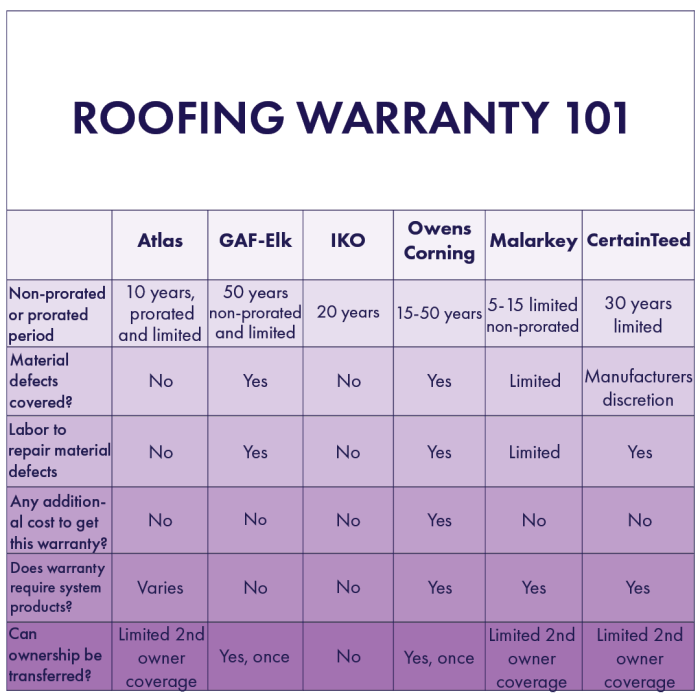
When it comes to roofing warranties, it is essential for homeowners to be aware of the exclusions and limitations that may affect their coverage. Understanding these factors can help prevent unexpected costs or issues down the line.
Common Exclusions Found in Roofing Warranties
- Damage caused by natural disasters such as hurricanes, tornadoes, or earthquakes.
- Issues resulting from improper installation or maintenance by unqualified contractors.
- Normal wear and tear over time, including fading or minor cosmetic damage.
- Damage caused by neglect or failure to perform regular inspections and upkeep.
Limitations Homeowners Should Be Aware Of
- Warranty coverage may only apply to the original homeowner and may not be transferable to subsequent owners.
- Some warranties have specific requirements for maintenance and inspections to remain valid.
- Coverage may be limited to certain types of damage or materials, excluding specific scenarios from protection.
- Reimbursement for repairs or replacements may be subject to a cap or limit, leaving homeowners responsible for costs beyond that amount.
Scenarios Where Warranties May Not Apply
- If the roof was not properly ventilated, leading to moisture buildup and damage.
- Damage caused by pests or animals accessing the roof and causing harm.
- Issues arising from modifications or additions made to the roof without following manufacturer guidelines.
- Damage resulting from extreme weather conditions that exceed the specified limitations of the warranty.
Warranty Claim Process
When it comes to filing a warranty claim for roofing issues, it is essential to follow the specific steps Artikeld by the warranty provider. This process ensures that your claim is handled efficiently and effectively. Here are the key steps involved in the warranty claim process and some tips to help expedite the process.
Steps for Filing a Warranty Claim
- Contact the warranty provider: Begin by reaching out to the warranty provider as soon as you notice an issue with your roof. Provide detailed information about the problem and follow their instructions for filing a claim.
- Schedule an inspection: The warranty provider may require an inspection of the roof to assess the extent of the damage. Cooperate with the inspection process and make sure to be present during the inspection.
- Submit documentation: Prepare all the necessary documentation to support your claim, including proof of purchase, warranty certificate, and any relevant photos or videos of the issue. This will help expedite the review process.
- Review of claim: The warranty provider will review your claim and determine whether the issue is covered under the warranty. Be patient during this process and provide any additional information requested promptly.
- Resolution: Once your claim is approved, the warranty provider will Artikel the next steps for resolving the issue. This may involve repair or replacement of the affected roofing components.
Tips for Expediting the Warranty Claim Process
- Act promptly: As soon as you notice a roofing issue, contact the warranty provider and initiate the claim process. Delaying can lead to further damage and complications.
- Be thorough: Provide detailed information and documentation to support your claim. The more information you provide upfront, the faster the review process will be.
- Follow up: Stay in touch with the warranty provider throughout the claim process. Regular communication can help expedite the resolution of your claim.
- Work with professionals: If repairs or replacements are needed, hire reputable roofing professionals who are familiar with the warranty requirements. This can help speed up the repair process.
Documentation Required for Submitting a Warranty Claim
- Proof of purchase: Provide a copy of the original purchase receipt or invoice to validate the warranty coverage.
- Warranty certificate: Include a copy of the warranty certificate provided by the manufacturer or installer.
- Photos or videos: Document the roofing issue with clear photos or videos to support your claim and provide visual evidence of the problem.
- Inspection reports: If an inspection is required, include the inspection report detailing the findings and recommendations.
Final Thoughts
In conclusion, roofing warranty options play a vital role in safeguarding your home investment. By being well-informed about the types, coverage, and processes involved, homeowners can make confident decisions to protect their roofs for years to come.
Popular Questions
Is a manufacturer warranty better than a contractor warranty?
Manufacturer warranties are typically more comprehensive and reliable compared to contractor warranties, as they are backed by the roofing material's manufacturer.
What factors can influence the duration of a roofing warranty?
Factors such as the quality of installation, type of roofing material used, and regular maintenance can all impact the length of a roofing warranty.
How can homeowners expedite the warranty claim process?
Homeowners can expedite the warranty claim process by ensuring they have all necessary documentation, photos of the issue, and contacting the warranty provider promptly.