Importance of Material Choice in Roofing
When it comes to roofing, the material choice plays a crucial role in determining the overall cost of the project. Different roofing materials vary significantly in terms of cost, durability, and maintenance requirements, which can all impact the final expenses.
Different Roofing Materials and Cost Implications
- Asphalt Shingles: Asphalt shingles are one of the most affordable roofing materials, making them a popular choice for many homeowners. They are cost-effective to install and come in a variety of colors and styles. However, they may require more frequent replacement compared to other materials, which can increase long-term costs.
- Metal Roofing: Metal roofing is more expensive upfront but offers excellent durability and longevity. While the initial cost may be higher, metal roofs tend to require less maintenance and have a longer lifespan, which can result in cost savings over time.
- Tile Roofing: Tile roofing is known for its aesthetic appeal and longevity. However, it is also one of the most expensive roofing materials to install. The high upfront cost is balanced by the durability and low maintenance requirements of tile roofs.
- Wood Shingles: Wood shingles provide a natural, rustic look to a home but are susceptible to rot and mold if not properly maintained. While the initial cost may be moderate, ongoing maintenance can add up over the years.
Material Durability and Maintenance Requirements Impact
The durability and maintenance requirements of a roofing material can significantly impact overall expenses. Materials that require frequent repairs or replacement will incur additional costs over time, while durable materials with low maintenance needs can provide long-term cost savings. Homeowners should consider not only the initial cost of the material but also its lifespan and maintenance requirements when choosing a roofing material.
Common Roofing Materials and Their Costs

When it comes to choosing the right roofing material for your home, cost is a significant factor to consider. Different materials come with varying price tags, and it's essential to understand the pros and cons of each option to make an informed decision.
Asphalt Shingles
Asphalt shingles are one of the most popular roofing materials due to their affordability. On average, asphalt shingles cost around $1.50 to $5.50 per square foot. While they are cost-effective, they may not be as durable as other options and may need more frequent replacements over time.
Metal Roofing
Metal roofing is known for its longevity and durability. The average cost of metal roofing ranges from $5 to $15 per square foot. Although it comes with a higher upfront cost, metal roofs can last for 50 years or more, making them a cost-effective option in the long run.
Tile Roofing
Tile roofing is a popular choice for its aesthetic appeal and durability. The average cost of tile roofing is between $7 to $20 per square foot. While tiles can be more expensive upfront, they have a long lifespan and require minimal maintenance, reducing long-term costs.
Wood Shingles
Wood shingles offer a natural and rustic look to a home. The average cost of wood shingles ranges from $6 to $10 per square foot. However, wood shingles may require more maintenance and have a shorter lifespan compared to other materials, potentially increasing long-term costs.
Comparing Cost-Effectiveness
In terms of cost-effectiveness, metal roofing may offer the best value for homeowners looking for a long-lasting and durable option. While asphalt shingles are more budget-friendly upfront, they may require more frequent replacements, leading to higher costs over time. Tile roofing strikes a balance between cost and durability, making it a popular choice among homeowners.
Long-Term Cost Implications
Choosing cheaper materials for your roof may save you money initially, but it could result in higher maintenance and replacement costs down the line. Investing in higher-quality, more expensive options like metal or tile roofing can pay off in the long run by reducing the need for frequent repairs and replacements, ultimately saving you money in the long term.
Factors Influencing Material Choice and Cost

When it comes to selecting roofing materials, several external factors play a crucial role in determining the choices made by homeowners and contractors. These factors not only impact the overall cost but also influence the performance and durability of the roof over time.
Climate, Location, and Building Codes
- The climate of a region, including factors like temperature fluctuations, precipitation levels, and exposure to harsh weather conditions, can significantly impact the choice of roofing materials. For instance, areas prone to heavy rainfall may require materials with superior water resistance, while regions with extreme heat may benefit from reflective roofing options to reduce cooling costs.
- Local building codes and regulations also play a vital role in material selection. Certain areas may have specific requirements regarding fire resistance, wind resistance, or energy efficiency that need to be met when choosing roofing materials.
Slope and Size of the Roof
- The slope of a roof can affect the type of materials that can be used effectively. Steeply pitched roofs may require materials that can withstand gravity and prevent water penetration, while low-slope roofs may benefit from materials specifically designed for efficient water drainage.
- The size of the roof also influences material choices and costs. Larger roofs typically require more materials, labor, and time to install, which can impact the overall expenses associated with the project.
Energy Efficiency Considerations
- Energy efficiency is becoming increasingly important in roofing material selection, as homeowners seek to reduce their carbon footprint and energy bills. Materials with high solar reflectance and thermal emittance can help improve the energy efficiency of a home, resulting in lower heating and cooling costs over time.
- Investing in energy-efficient roofing materials may involve higher upfront costs but can lead to long-term savings and environmental benefits, making it a worthwhile consideration for many homeowners.
Cost Comparison of Roofing Materials
When considering roofing materials for your home, it is important to understand the cost implications associated with each option. Here, we will break down the cost differences between popular roofing materials for a standard-sized residential roof, comparing upfront costs with long-term savings, installation costs, maintenance requirements, and lifespan.
Asphalt Shingles
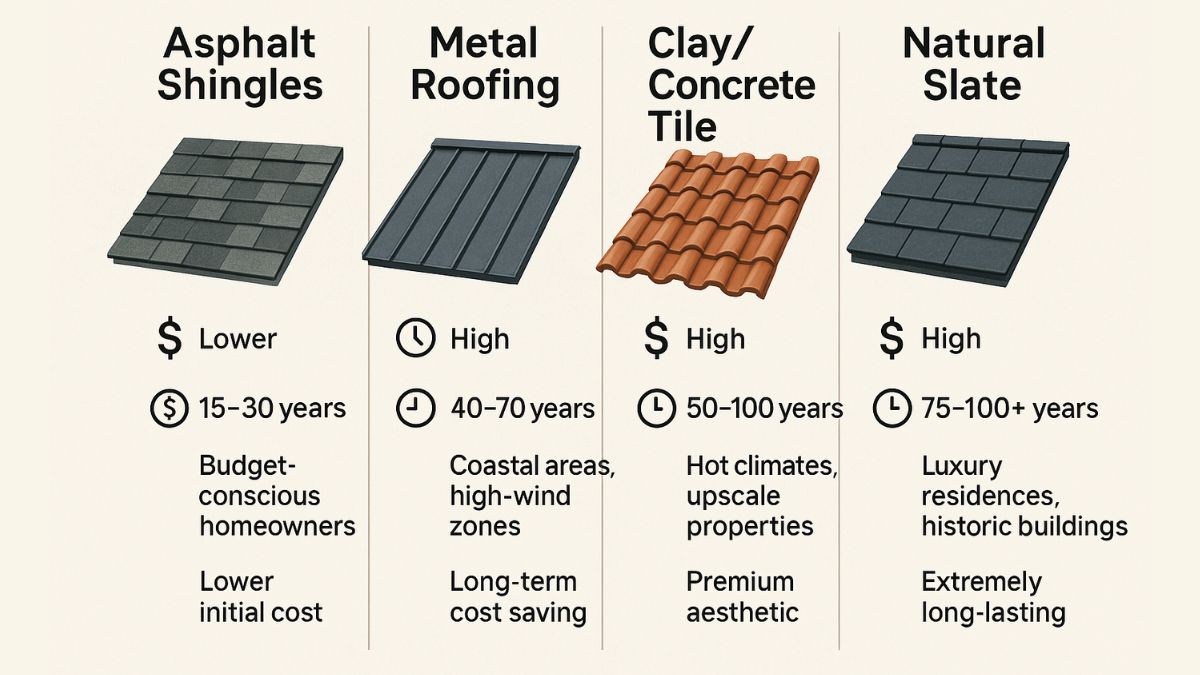
Asphalt shingles are one of the most affordable roofing options, with upfront costs ranging from $1.50 to $5.50 per square foot. While they may have a lower upfront cost, they have a shorter lifespan of around 20-30 years and may require more frequent repairs and maintenance compared to other materials.
Metal Roofing
Metal roofing has a higher upfront cost, ranging from $5.00 to $15.00 per square foot, but boasts a longer lifespan of 40-70 years. Metal roofs are also more durable and require less maintenance, potentially leading to long-term savings in repair costs.
Wood Shakes
Wood shakes have an upfront cost of $6.00 to $11.00 per square foot and a lifespan of 20-40 years. While they offer a natural aesthetic appeal, they require regular maintenance to prevent rot and insect damage, increasing long-term costs.
Tile Roofing
Tile roofing comes with an upfront cost of $10.00 to $20.00 per square foot and has a lifespan of 50-100 years. While more expensive initially, tile roofs are extremely durable and low maintenance, making them a cost-effective choice in the long run.
Slate Roofing
Slate roofing is one of the most expensive options, with upfront costs ranging from $10.00 to $20.00 per square foot. However, slate roofs can last 75-100 years or more with minimal maintenance, offering significant long-term savings and durability.
FAQ Section
What are some common roofing materials that impact costs the most?
Some common roofing materials that significantly impact costs include metal, tile, and wood due to their initial price and maintenance requirements.
How does the location of a property affect material choice for roofing?
The location of a property can impact material choice due to factors like climate, local building codes, and environmental considerations, which can influence the selection of appropriate roofing materials.
Is it worth investing in higher-quality roofing materials for long-term cost savings?
Investing in higher-quality roofing materials may initially cost more but can lead to long-term savings through reduced maintenance, improved durability, and potentially lower energy bills.